
Recipe: Apple and Bacon Crostini with Caramelized Onion Gouda Spread
/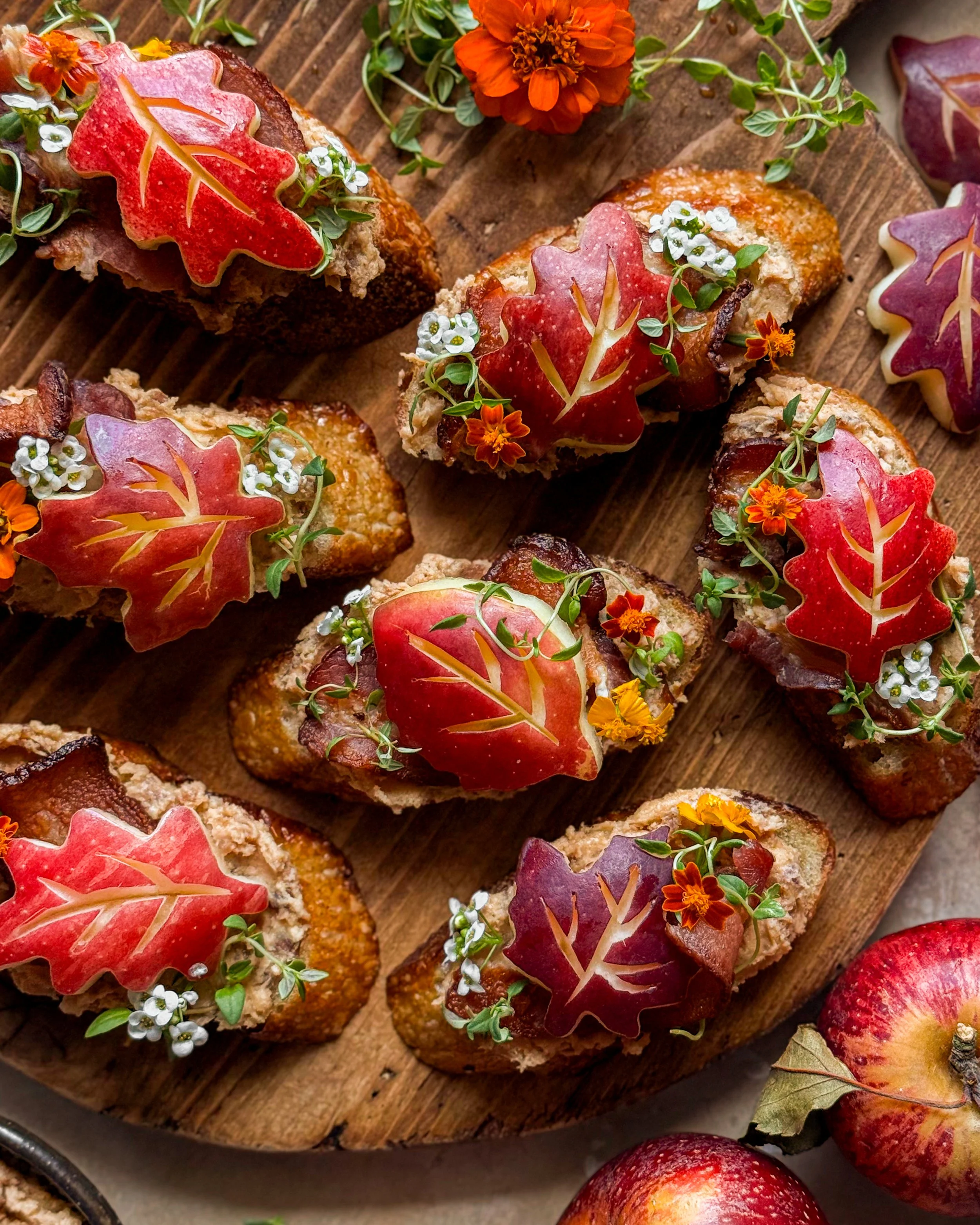
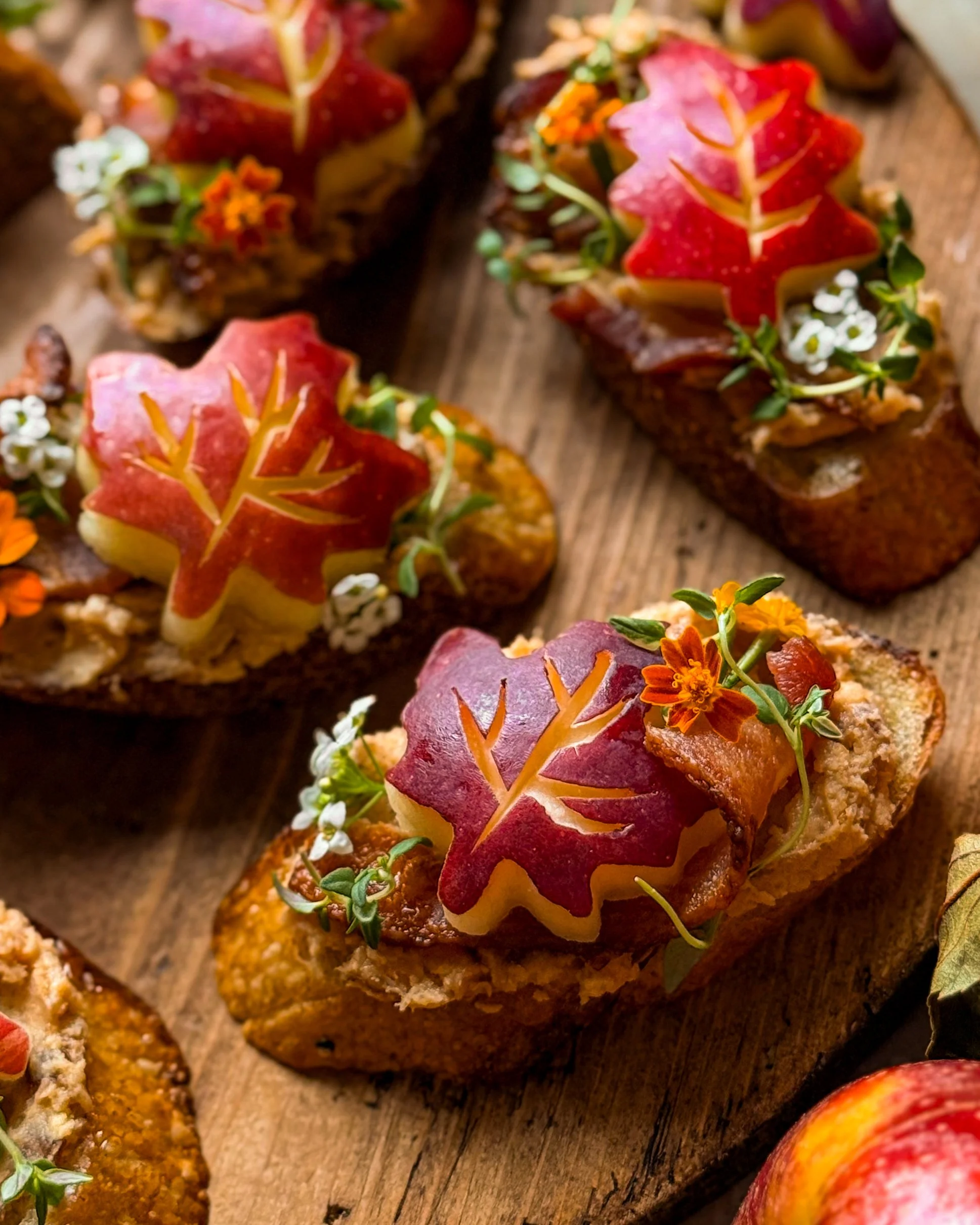
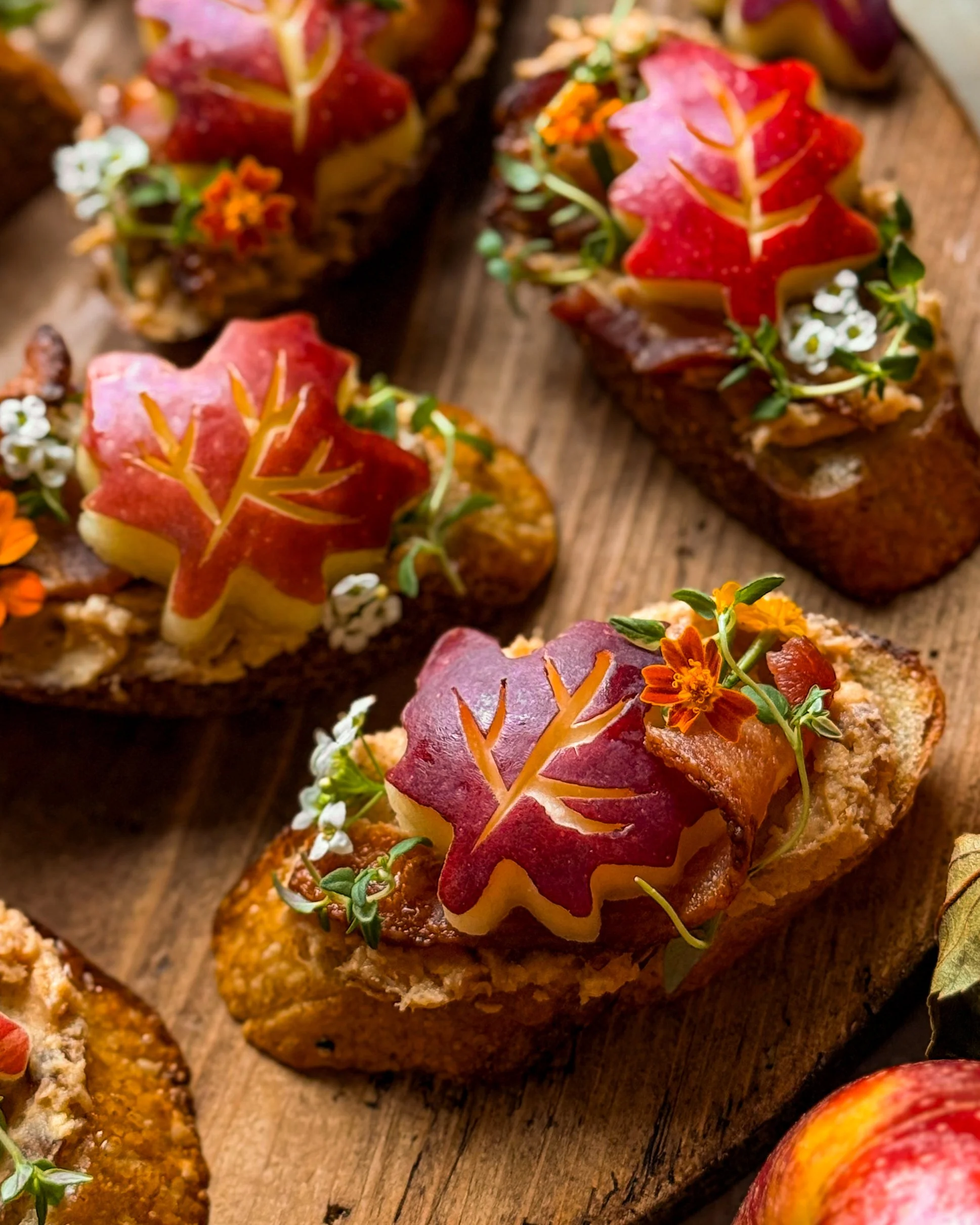
For this recipe, I partnered with Cabot Creamery to make the perfect cheesy crostini for the fall season. Each little toast is topped with a creamy caramelized onion and gouda cheese spread, bright apple pieces, crisp applewood smoked bacon, and fresh thyme. Apples are the prominent seasonal fruit at my local farmers markets now, with colors as varied as fall foliage. So of course I felt inspired to cut my apple pieces into the shapes of autumnal leaves, which I believe are what make these crostini so cute and eye-catching. But once you bite into them, you’ll find that the star of these crostini is actually the cheese spread!
The special thing about creating fall recipes that is so different from summer is it’s not just about using what’s in season. Rather, it’s also about that feeling of coziness—cooking dishes that help to keep the home a little warmer and smelling so good by having something slowly cooking away on the stove. Although mini toasts may not be what comes to mind for comfort food, I do think I managed to capture that cozy cooking vibe with this caramelized onion gouda spread. The onions are slowly caramelized to bring out a deep sweetness that can only come from something gently sizzling on the stove and the creamy texture plus nutty notes of Cabot’s gouda make it the perfect savory cheesy conduit for getting this cozy flavor to cling to the crostini.
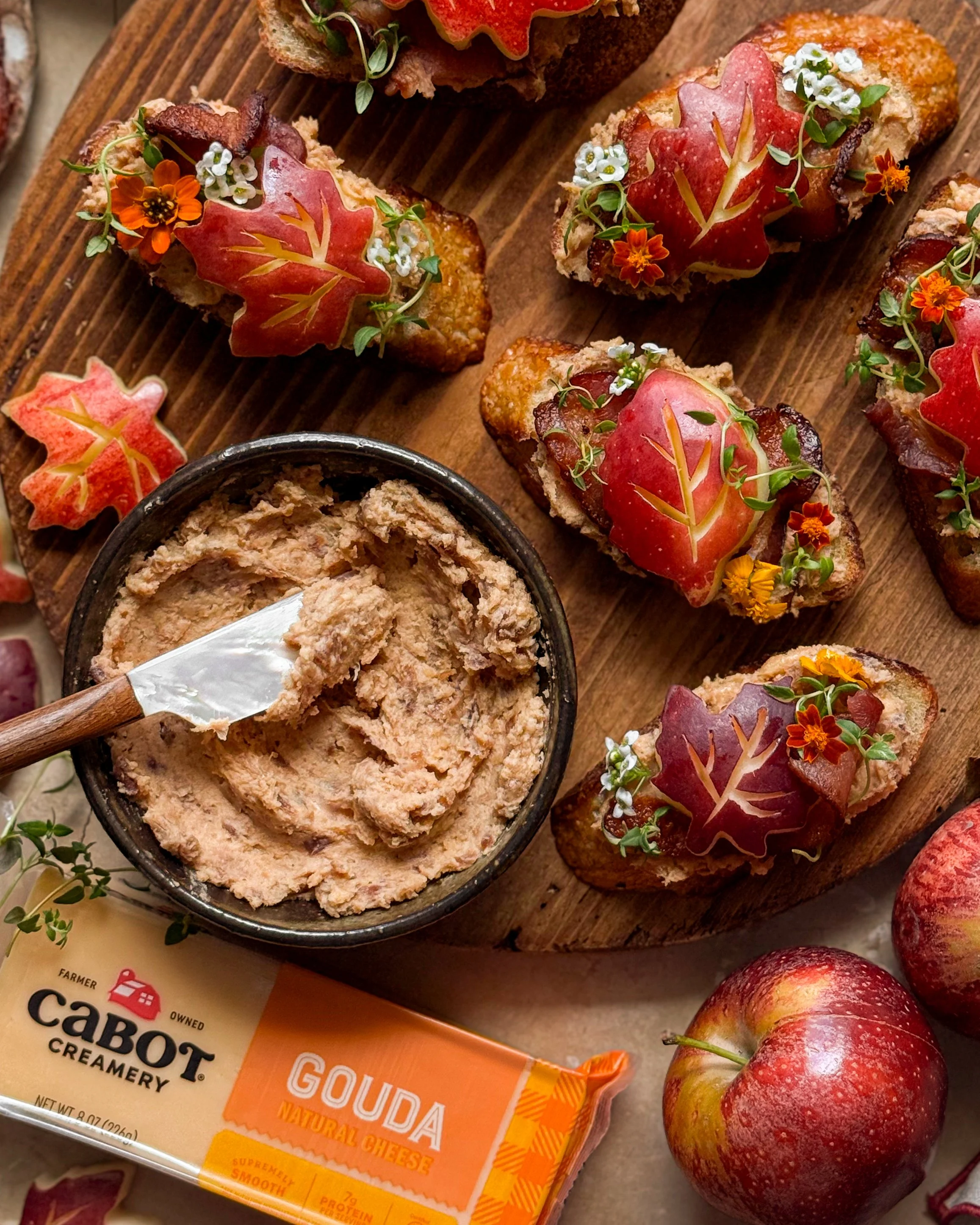
It would be delicious enough to simply serve toasty slices of baguette slathered in the sweet/savory cheese spread, and if that’s as far as you’d like to follow this recipe, I believe your tastebuds will be happy indeed. But as for me, I’ll always view a tasty, thick spread like this as a form of flavorsome glue that allows me to have fun decorating. In addition to the “leaves” made of crisp, slightly tart apples, I also topped the crostini with a little crispy bacon to bring bold savory, salty flavor by way of something else that I thought also visually resembled crunchy fallen leaves.
These crostini are perfect for serving at Thanksgivings, Friendsgivings, or simply to snack on at home while hunkering down into your cozy-maxxing era this year. I hope you enjoy them!
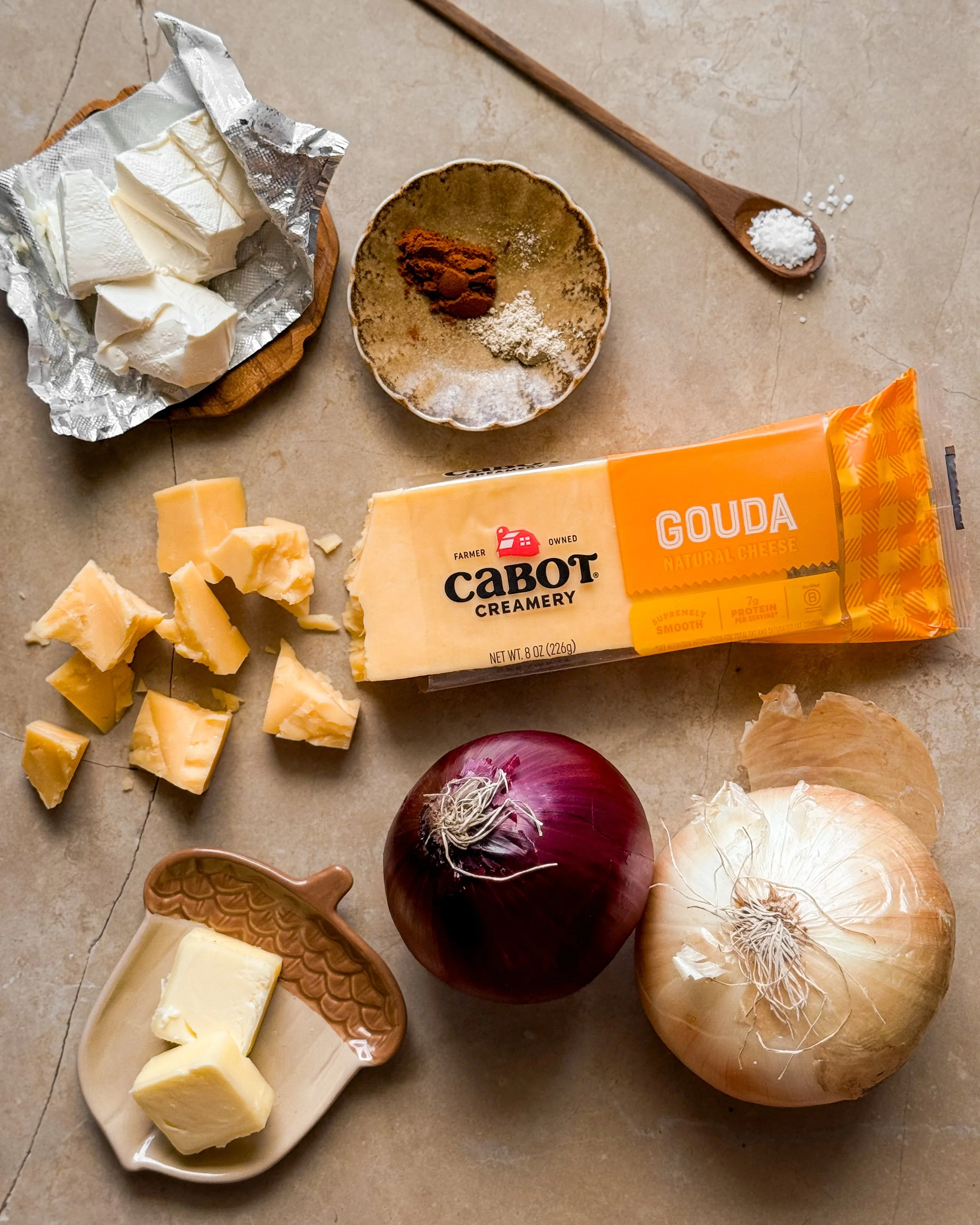
Notes about the Ingredients for the Caramelized Onion Gouda Spread
Gouda Cheese: This is the flavor foundation for the recipe, so using the right cheese is so important. Cabot Creamery Gouda is creamy and nutty, with a subtle sweetness that makes it perfect for the autumn-themed sweet/savory crostini. Plus, I know that lots of people are protein maxxing these days, and each serving of Cabot gouda contains 7 grams of protein! Cabot is a co-operative owned by farm families throughout New England & New York and 100% of profits go back to the farmers.
Onions, Butter, and Salt: For this recipe, onions get cooked low and slow with just a little bit of butter and salt. The goal will be to cook off all excess liquid until we’re left with a concentrated version of the onions’ natural sweetness and a texture that is silky and jammy. I used one red onion and one sweet onion to maximize the complex onion flavor of my cheese spread. Feel free to use the onions that you have on hand; you’ll want about 1 1/4 to 1 1/2 pounds of onions total to start, diced into roughly 1/4-inch pieces.. Once cooked, this will yield about 1/2 cup.
Cream Cheese: Since the gouda is a semi-soft block cheese, processing it with a little bit of cream cheese will help to create a soft mixture that is easy to spread onto the crostini. Bring the cream cheese up to room temperature first for best results.
Ground Spices: White pepper and smoked paprika are warming spices that add extra depth to the cheese spread. They are subtle but they help meld together the sweet flavor from the caramelized onions and the classic cheesiness of the gouda.
Notes About Making the Caramelized Onion Gouda Spread
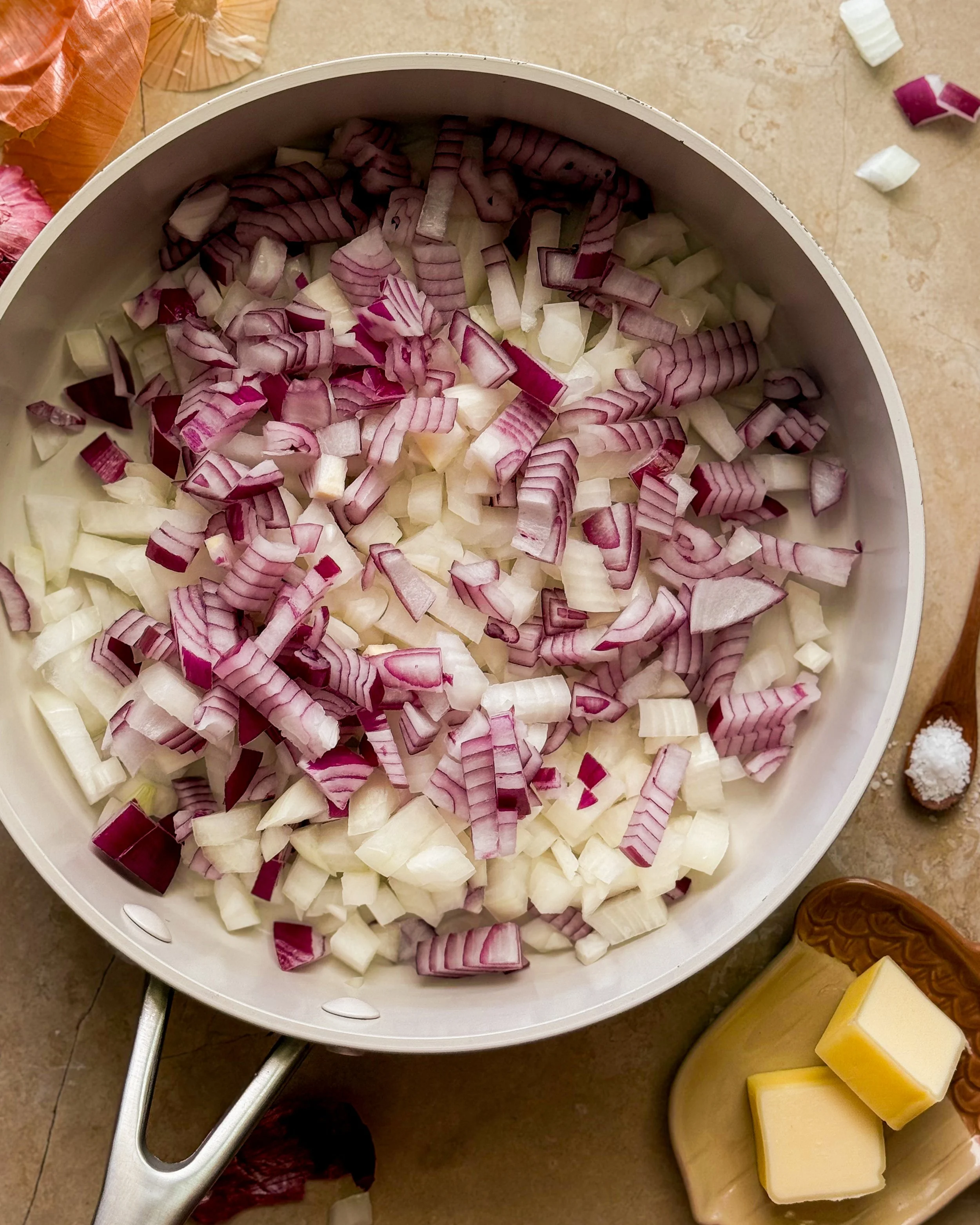
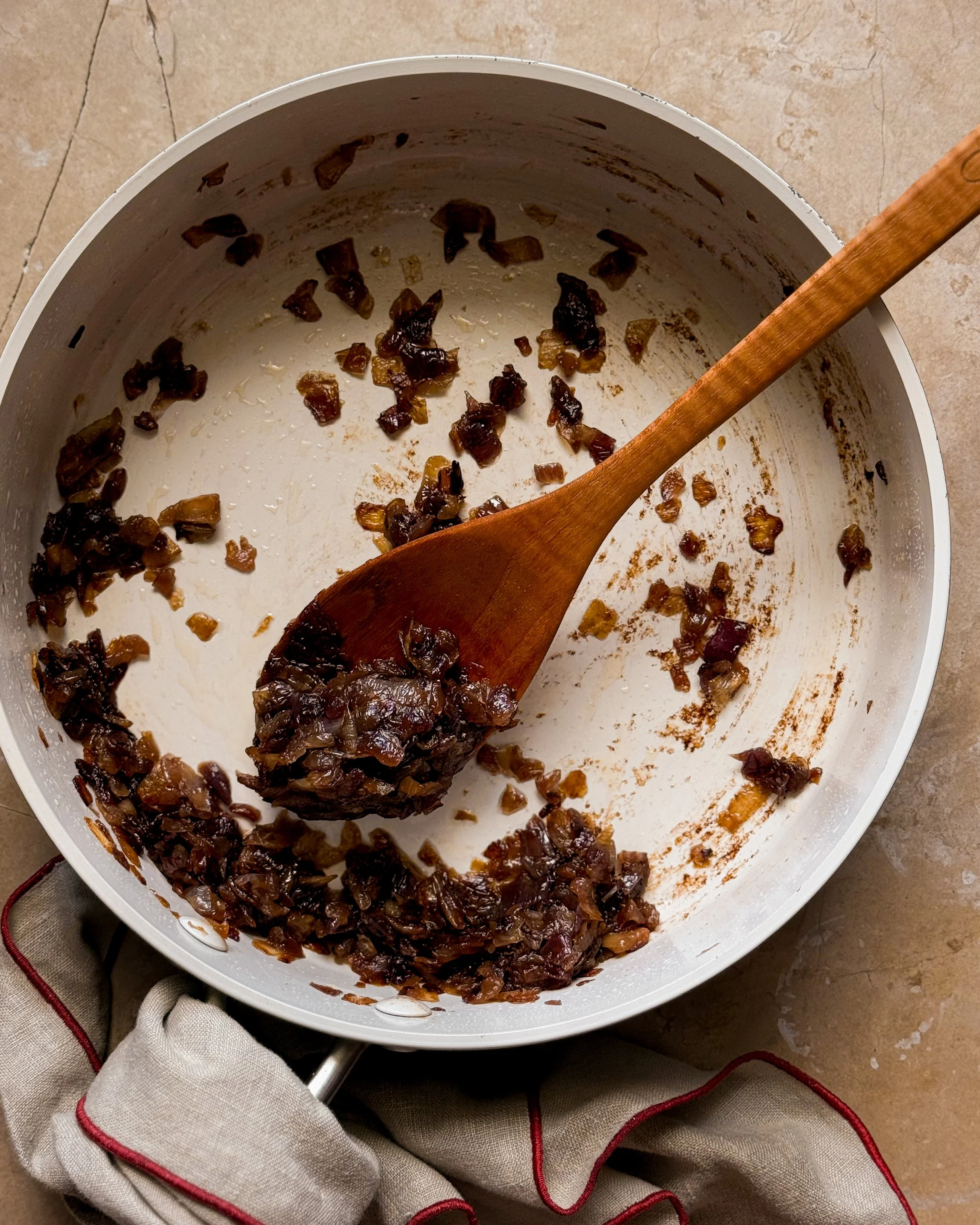
One special ingredient I did not mention above is patience! Cooking the onions slowly, on low heat, is the key to concentrating their natural sweetness and getting that jammy texture while ensuring that they don’t bring any burnt, bitter flavors. It will seem like a lot of onions when you initially dice them up, but you will be amazed at how far they shrink down if you patiently cook them down until they are perfectly caramelized and there is no longer any excess moisture that would cause your cheese spread to be runny.
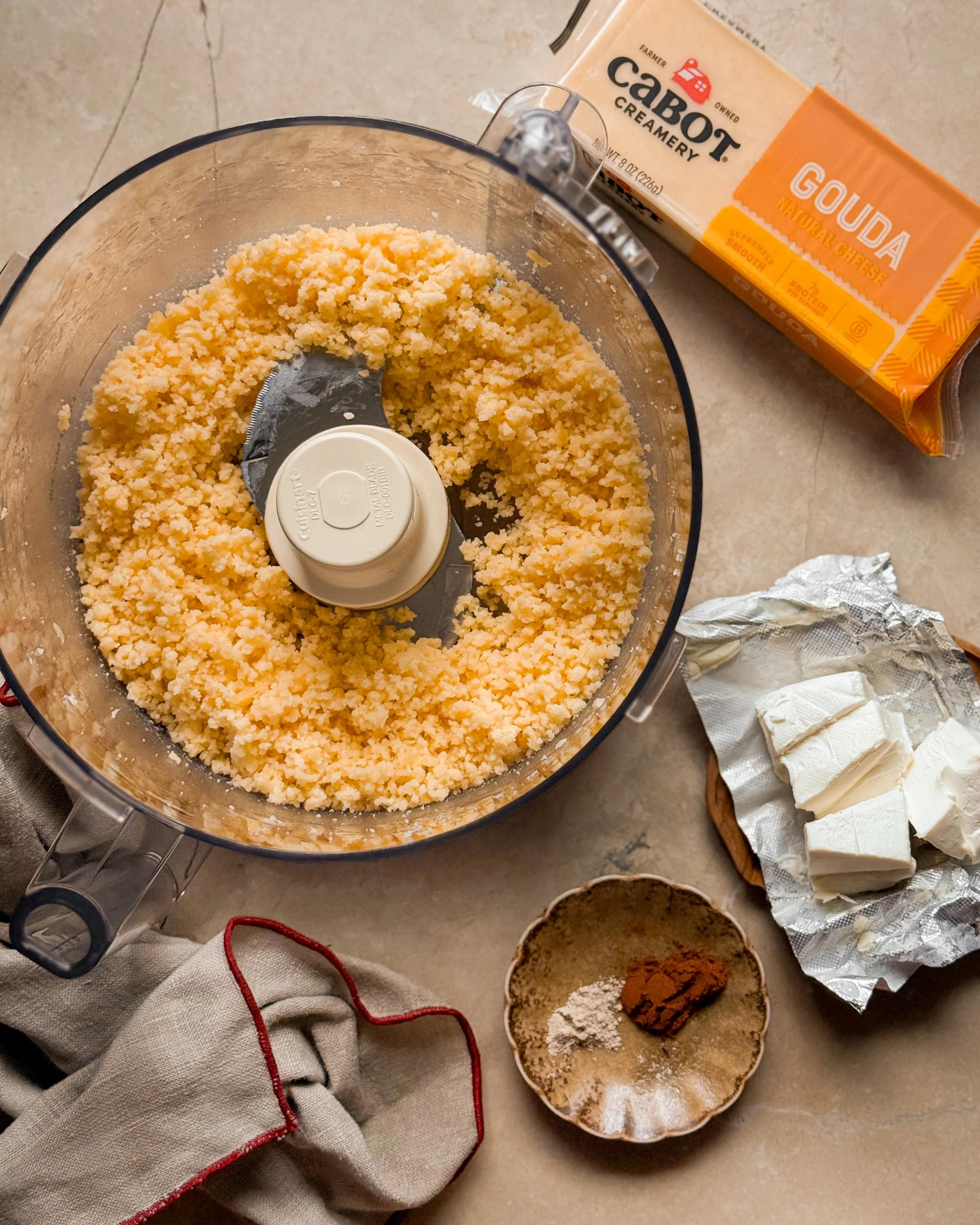
While you’ll need to plan a little time to cook the onions, the rest of the process for making this spread is so easy. You don’t even need to grate the gouda! Instead, you’ll just use a food processor to break down chunks of the cheese into small crumbles; they will sort of look like the texture of crumbled cotija, or panko. But after further combining them with cream cheese, they will become a smooth, thick, spreadable texture that is perfect for slathering on to your crisp mini toasts.
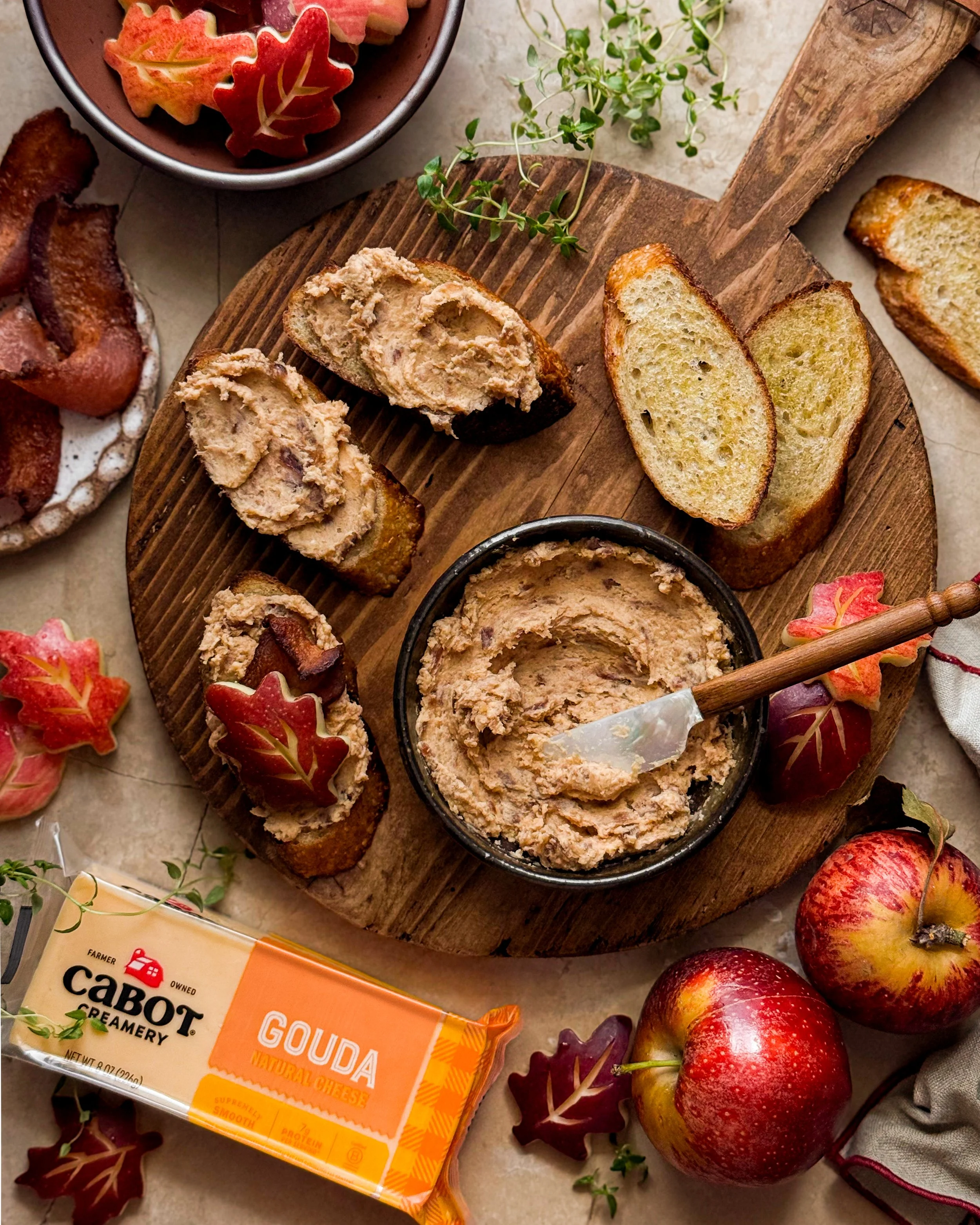
Notes on Making the Crostini
The written recipe below will provide amounts for what you need to make the crostini shown in the photos. I sliced my baguette on a slight angle so the toppings needed may vary depending on how you slice yours, and the length of your baguette. Once you slather on the cheese spread, there’s room for lots of variation. Do feel free to decorate to your liking, but please consider the notes I’ve provided if you’d like to replicate what you see in the photos.
Toppings for the crostini:
Apple Slices: I used cookie cutters on a variety of apples to cut them into the shapes of fall leaves, then used a sharp paring knife to carve the “veins”. I could get 6–8 leaves from each large apple, but your yield may vary according to the size of your apples and cookie cutters. Alternatively, you could core and thinly slice a couple of apples; use a few slices per toast and fan them out to create a pretty visual effect that is much easier than what I did for my photos. To keep cut apple pieces from turning brown, I used the salt water method from this Serious Eats article.
Bacon: I used thick applewood smoked bacon for my crostini because I think the smoky flavor pairs very well with the caramelized onions. Feel free to use your favorite kind of bacon and just be aware that cook times will vary depending on the bacon you use. Crisping the bacon in the oven allows you to have control over the final shape of the strips when they are cooked. Rather than laying them flat and neat in your baking sheet, curl them or bunch them up a bit so that you end up with natural, sculptural shapes that will look interesting on top of your crostini.
Thyme: I always like to include a fresh herb as a finishing touch when I am working with other rich, creamy, and cheesy ingredients on my toasts. The thyme I used here was from a young living thyme plant, which is why there are these beautifully delicate, curvy stems. Grocery stores will typically carry packaged thyme that is straighter and a little more woody; you may wish to pick the leaves off and sprinkle them on your crostini, or simply use less thyme per crostini.
Edible Flowers: Remember that not all flowers are safe to eat and be certain about what you have before incorporating flowers into your food. I used tiny zinnias, sweet alyssum, gem marigolds, and Mexican tarragon blossoms, all of which I grew myself. I included the flowers mainly for visual appeal but I did find that the Mexican tarragon’s lovely little golden-yellow flowers added a nice extra herbaceous and subtly floral flavor that went well with the other ingredients.
I knew that the apples and bacon would taste amazing together on these crostini, but while working on this recipe, I grew curious about why this was such a classic pairing, especially in the fall. It turns out that there's a little seasonal history behind that combo. In the old days, in climates similar to mine, fall was the time for both apple harvesting and preparing meats to be preserved for the colder months ahead, so they were simply both in abundance at the same time.
They also happen to work beautifully together from a flavor perspective: the sweetness and gentle tartness of apples helps to balance the salty, savory richness of cured or smoked pork. You will definitely find this to be true if you make this recipe!
How to Make Apple and Bacon Crostini
with Caramelized Onion Gouda Spread
Ingredients for the Cheese Spread
2 medium onions (1 1/4–1 1/2 lbs total), diced into 1/4” pieces
2 tbsp Cabot Unsalted Butter
1/8 tsp kosher salt
6 oz Cabot Gouda, cut into rough chunks
2 oz Cabot Cream Cheese, at room temp
1/4 tsp smoked paprika
1/8 tsp ground white pepper
Ingredients for the Crostini
4 slices of bacon
1 baguette
4–6 tsp extra virgin olive oil
1 1/4 cups Caramelized Onion Gouda Spread
2–4 apples*
thyme
edible flowers, such as mexican tarragon blossoms and gem marigolds (optional)
*If you are cutting the apples into fall leaves as shown in the photos, you will need about 4 large apples. Each apple yields 6–8 leaves. For an easier alternative, core and thinly slice 2 apples.
Procedure
To make the cheese spread: Add onions, butter, and salt to a wide sauté pan. Cook on medium heat until the audible liquid has been cooked out and the onions are no longer making a wet simmering sound (5–8 minutes). Reduce heat to low. Cook, stirring occasionally, until the onions are jammy and a deep brown color; note that once the onions reach a rich caramel color and sound dry, you will need to watch them more carefully and stir more often. This process of cooking the onions on low heat should take 50–60 minutes and yield about 1/2 cup caramelized onions. Allow onions to cool slightly.
Process chunks of gouda in a food processor until it is the texture of small crumbs (like panko). Add the cream cheese, smoked paprika, and white pepper and process until the mixture is combined and holding together. Add half the onions and process until just combined. Then, add the rest of the onions and pulse a few times to incorporate.
The cheese spread can be made 5–7 days ahead and stored in a clean container in the refrigerator but must be brought to room temperature to be easily spreadable.
To make the crostini: Prepare the apples as desired (see notes in above blog post for details on food styling).
Prepare the bacon. Preheat oven to 400°F. Place slices on a parchment- or foil-lined baking sheet, curling or bunching them slightly so they don’t stay flat. Bake until just crisped: 14–16 minutes for thin bacon or up to 20 minutes for thick cut bacon. Place cooked bacon on paper towels to absorb excess grease. When cool enough to handle, break into rough pieces, each about 1 inch long.
In the meantime, turn the oven up to 475°F. Trim away the end parts of the baguette and slice the rest on a slight bias into about 20–24 slices. Brush each slice on one side with olive oil and place on a baking tray. Bake/toast in the oven for 4–7 minutes, depending on your preference for toastiness.
Divide the cheese spread evenly among the crostini, spreading roughly 1 tablespoon on each. Decorate each slice with 1–2 bacon pieces, some apple, and thyme. Add edible flowers as a finishing touch, if desired.
Thank you so much to Cabot Creamery for sponsoring this recipe! Visit their website to find out where you can get their best selling gouda and their award-winning cheddars near you.